
Beyond the Agreement Value: A Guide to Registration and Stamp Duty in 2026

Registration and stamp duty charges are the mandatory legal taxes levied by state governments to transition a property's ownership, which are calculated over and above the baseline agreement value or market price. While buyers often fixate purely on the builder’s base price, ignoring these statutory legal additions can instantly wreck a financial plan. In 2026, navigating these numbers carefully is more critical than ever, especially following major policy recalibrations like Karnataka’s recent revision of property registration fees.
To ensure your investment is financially sound, let’s look at what these costs entail and how they alter your actual, out-of-pocket transaction value.
Why The "Agreement Value" Is Only Half the Story
When you sign a sale agreement, the price mentioned is the Agreement Value—the money paid to the seller or developer. However, the legal system does not recognize ownership based on a private contract alone.
To gain absolute legal ownership, the transaction must be recorded in the government archives, which triggers two major costs:
- Stamp Duty: A transaction tax collected by the state to validate the legal documents.
- Registration Fee: The administrative cost paid to the Sub-Registrar’s office to record the execution of the deed.
Understanding the Financial Impact (2026 Slab Analysis)
To understand how these numbers stack up, let us examine the operational figures using Karnataka's updated model as a prime benchmark.
In late 2025, the state government doubled the registration fees from 1% to 2% for all transaction categories. When combined with a tiered, slab-based stamp duty, plus localized cesses and surcharges, the total cost can alter your budget significantly.
| Property Value Slabs | Stamp Duty Rate | Registration Charges | Added Surcharges (Urban Hubs) | Total Estimated Tax Load |
|---|---|---|---|---|
| Below ₹20 Lakh | 2% | 2% | 10% Cess + 2% Surcharge on Stamp Duty | ~4.24% of Property Value |
| ₹20 Lakh to ₹45 Lakh | 3% | 2% | 10% Cess + 2% Surcharge on Stamp Duty | ~5.36% of Property Value |
| Above ₹45 Lakh | 5% | 2% | 10% Cess + 2% Surcharge on Stamp Duty | ~7.60% of Property Value |
Critical Note: Crossing the ₹45 lakh threshold immediately shifts your core stamp duty rate from 3% to 5%. For a premium home valued at ₹75 lakh, your out-of-pocket statutory fees will accumulate to approximately ₹5,70,000.
Real-World Impact: Case Study of a Premium Township
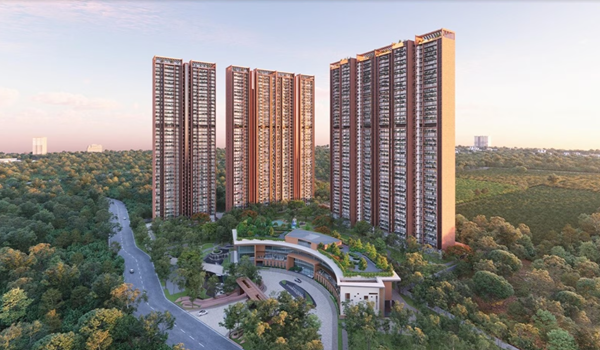
To see how these 2026 statutory taxes affect real numbers, let’s look at a prominent premium township like Sobha One World in Hoskote, East Bangalore.
For a baseline 1 BHK home in Sobha One World priced at a pre-launch agreement value of ₹1.09 Crores, the statutory calculation breakdown looks like this:
- Base Agreement Value: ₹1,09,00,000
- 5% Stamp Duty: ₹5,45,000
- 2% Registration Fee: ₹2,18,000 (Note: Factoring in the updated 2026 Karnataka slab rates)
- GST (5%): ₹5,45,000
When you add these components together, a buyer looking at a premium development must prepare an additional upfront amount of over ₹13 Lakhs purely for taxes and government fees. This highlights why tracking tax rules matters as much as tracking property prices.
The Hidden Variables: Guidance Value vs. Market Value
Calculating these percentages on the correct base figure is a crucial step in structural budgeting for home buyers. The government mandates that stamp duty and registration fees are calculated based on whichever is higher: the Actual Market Agreement Value or the Government Guidance/Circle Rate.
Even if a buyer secures a highly favorable market deal below the established government circle rate, the legal tax calculation by the sub-registrar will naturally default to the official guidance value to ensure standardized revenue recording. Aligning your financial planning with this baseline guarantees a smooth, predictable, and fully compliant closing process.
![]() Frequently Asked Questions
Frequently Asked Questions

The agreement value is the final transaction price mutually agreed upon between the buyer and the seller. The market value (or guidance value) is the minimum rate set by the local government for a specific area. Government agencies calculate stamp duty and registration fees on whichever value is higher.
No, the Reserve Bank of India (RBI) mandates that commercial banks cannot include stamp duty and registration charges within the primary Home Loan LTV (Loan-to-Value) ratio. These statutory taxes must be paid directly by the buyer as upfront equity.
Yes, under Section 80C of the Income Tax Act, buyers can claim tax deductions for expenses incurred toward stamp duty and registration fees. However, this deduction is capped within the overall Section 80C limit of ₹1.5 lakh and can only be claimed in the financial year the property was registered.
Using major real estate hubs like Bangalore/Karnataka as a baseline, registration charges have shifted. Effective from late 2025 and continuing through 2026, the registration fee has been revised upward from 1% to 2% across all standard property transactions.
Registering a property below its actual value is a serious legal offense under the Stamp Act. If the Sub-Registrar suspects undervaluation, they can audit the transaction, stall the document release, and penalize you with heavy fines alongside paying the deficit tax.
While certain states historically offered a 1% to 2% concession on stamp duty for women, several major states (including Karnataka) do not offer gender-based tax relief. Slabs apply uniformly to male, female, or joint property registrations.
Cess and surcharges are not calculated on the total property cost; instead, they are levied as a percentage of the calculated stamp duty itself. For example, if your core stamp duty amounts to ₹1,00,000, an urban 10% cess and a 2% surcharge would add ₹10,000 and ₹2,000 respectively, bringing the final stamp duty payout to ₹1,12,000.



















 24/7 Support
 Free Site Visit
 Unmatched Price