Kempegowda International Airport
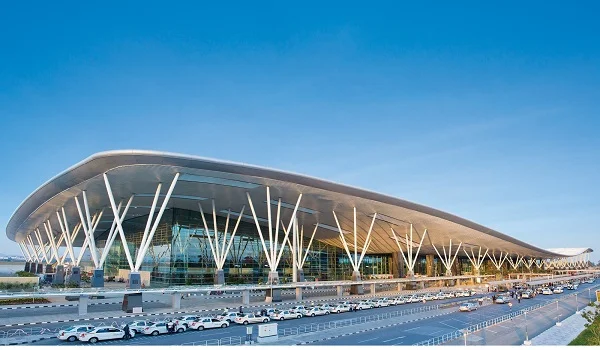
Kempegowda International Airport (KIA) is South India's premier global aviation hub and the definitive anchor driving North and East Bangalore's multi-billion-dollar real estate transformation into a structured, hyper-connected mega-city corridor. For modern property buyers, corporate leaders, and senior real estate content writers tracking the market, the airport is no longer just a transit terminal. It acts as the core economic engine of the city, pulling in advanced multi-modal transport links, global corporate offices, and luxury integrated townships like Sobha One World.
As India's third-busiest aviation facility handling over 43 million passengers annually, its compounding growth has turned the entire surrounding landscape—from Hebbal and Yelahanka up to Devanahalli and the Hoskote highway corridor—into a high-yielding goldmine for real estate investments.
The "Airport Effect": Transforming Red Soil into Premium Real Estate
When analyzing the growth of city suburbs, global data shows a clear rule: for every 10% rise in international airport passenger traffic, surrounding land values witness a steady 3.5% to 5% appreciation spike. In the local market, this dynamic has played out on an even bigger scale:
Unprecedented Capital Appreciation: Driven by ongoing airport expansions and surrounding commercial development, standard land and apartment prices in the Devanahalli and Shettigere pockets have surged by an impressive 20.3% year-on-year, with select pockets seeing value double over the last five years.
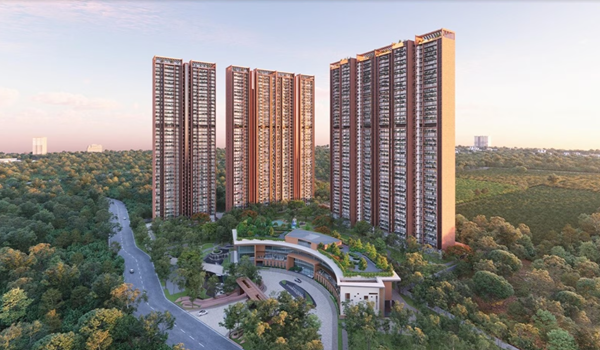
The Rise of Integrated Townships: To escape the chaotic, unplanned traffic jams of central Bangalore, upscale buyers are moving toward massive, self-sustained township ecosystems. A stellar example is Sobha One World, a monumental 300-acre master-planned high-rise township in the Hoskote corridor that mirrors the architectural scale of global airport-city layouts while keeping the airport accessible via direct, signal-free highways.
The "Aerotropolis" Job Engine: The region is anchored by the massive KIADB Aerospace & Hardware Park and the upcoming 463-acre Bengaluru Airport City development. Hosting global tech giants like Boeing, Foxconn, and state-of-the-art corporate complexes, it is drawing thousands of high-earning management professionals and engineers to the area.
Multi-Modal Infrastructure Lifelines Connecting to KIA
The physical transformation across the northern and eastern belts is heavily accelerated by three massive public transportation systems coming together simultaneously:
1. Namma Metro Blue Line (The Airport Metro)
The highly anticipated 27 km elevated Blue Line is actively progressing through its final deployment and station-finishing phases. Stretching smoothly along the Outer Ring Road (ORR) from Silk Board and KR Puram up through Hebbal and Yelahanka directly into the airport terminals, this line will allow daily corporate commuters to zip from the city center to the airport in under 45 minutes.
2. The Satellite Town Ring Road (STRR)
The newly operational stretches of the massive STRR have permanently changed regional travel dynamics. By routing heavy interstate freight trucks completely away from local neighborhood roads, it has significantly lowered local air pollution while providing peripheral expansion corridors—including the Hoskote belt where Sobha One World is strategically located—with a clean, traffic-free 35-to-45-minute high-speed drive straight to the airport gates.
3. Bengaluru Suburban Rail Project (BSRP)
Running parallel to the highway systems, the 41 km Sampige Line corridor will connect the central business district (Majestic/KSR Bengaluru) directly to the airport zone. This high-frequency rail link provides commuters with a highly reliable alternate transit path that entirely avoids road-level congestion.
Property Market Index: Airport Growth Corridor
The massive infrastructure boom surrounding Kempegowda International Airport has redefined baseline real estate valuations across primary residential and commercial nodes:
| Micro-Market Locality | Primary Real Estate Segment | Average Price Range | 1-Year Value Growth | Main Local Catalyst |
|---|---|---|---|---|
| Devanahalli / KIA Belt | Gated Plots & Luxury Villas | ₹7,000 – ₹9,600 / Sq. Ft. | 20.3% | Bengaluru Airport City & Aerospace Park |
| Sobha One World (Hoskote) | Mega Integrated Township | ₹7,100 – ₹12,000 / Sq. Ft. | 17.4% – 22% | Tallest 54-Story Towers, STRR & NH-75 Intersection |
| Yelahanka Core | Premium Mid-Rise Apartments | ₹8,500 – ₹11,500 / Sq. Ft. | 14% – 16% | Taj GVK 256-Key Launch & Metro Hub |
| Hebbal Hub | High-End Luxury High-Rises | ₹10,500 – ₹14,500 / Sq. Ft. | 12% – 15% | Express Elevated Flyovers & ORR Access |
| Bagalur Corridor | Mid-Segment Residential Plots | ₹5,500 – ₹7,500 / Sq. Ft. | 18% | Foxconn & Boeing Manufacturing Units |