
How has Old Madras Road Changed?
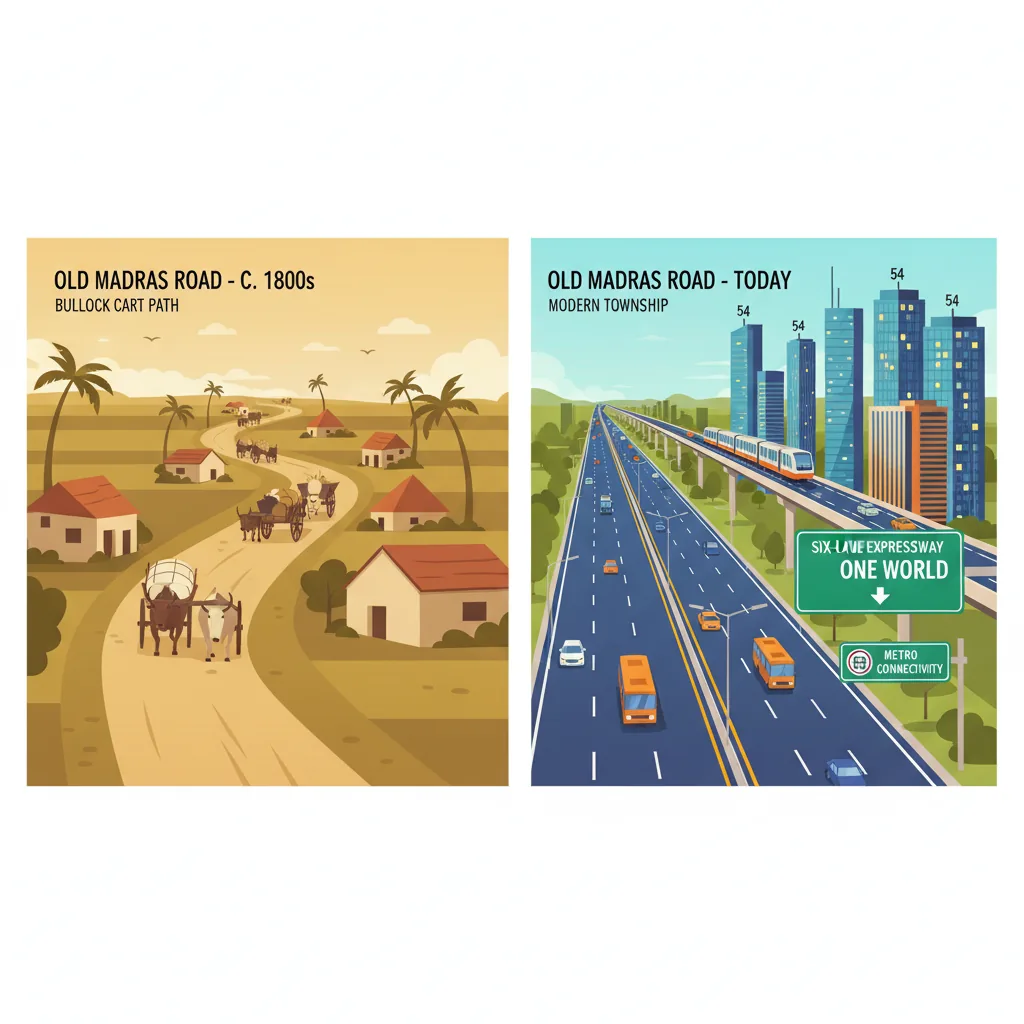
Old Madras Road has changed from a dusty, truck-dominated transit highway into one of East Bangalore’s most elite, self-contained residential and tech-connected corridors, driven by mega infrastructure projects and premium integrated townships. For senior real estate investors and modern home buyers tracking city expansion, this stretch is no longer just a path to travel through. It has officially shifted from a peripheral industrial route into a high-performing asset hub right in the direct line of Bangalore’s fastest economic growth.
The Core Drivers of the OMR Transformation
To understand how this micro-market has captured the attention of top-tier developers and property buyers alike, we must examine the specific shifts that have redefined its identity:
From Logistics Route to Lifestyle Central: Historically known for warehouses and industrial transit, Old Madras Road (NH-75) has been completely upgraded. It is now lined with grade-A office spaces, premium dining high streets, and massive entertainment zones.
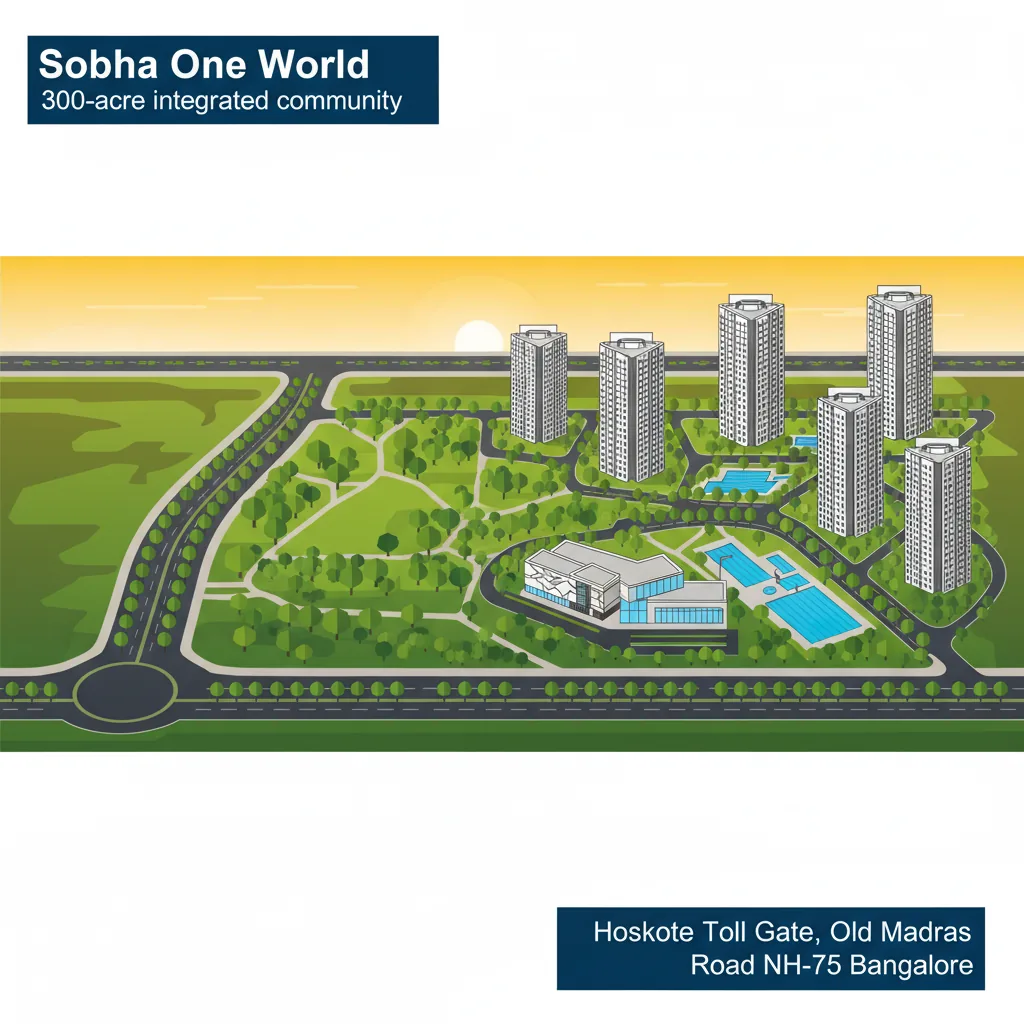
The "15-Minute City" Township Shift: Instead of cramped, standalone apartment blocks that add to urban congestion, the corridor is now home to massive, master-planned ecosystems. Landmark projects like Sobha One World—a monumental 300-acre next-generation township featuring iconic 54-story high-rise towers—are redefining the skyline and offering self-contained living where work, leisure, and luxury coexist.
Explosive Capital Appreciation: Driven by high demand from the nearby corporate sectors, average apartment prices along the corridor have experienced a powerful 18.8% to 19.8% year-on-year surge, outperforming many mature inner-city tech neighborhoods.
Infrastructure Lifelines That Reshaped the Highway
The real physical change on Old Madras Road comes down to massive public transportation and highway expansions that have systematically removed the area's old traffic bottlenecks:
1. The Namma Metro Purple Line Extension
The fully functional extension of the Metro Purple Line (stretching all the way to Whitefield via the K.R. Puram interchange) has completely altered daily travel. Commuters along OMR can now easily skip highway traffic entirely, reaching the central business district or the Whitefield corporate zone in minutes.
2. Multi-Highway Intersections (STRR & NE-7)
Old Madras Road connects directly to the newly operational stretches of the Satellite Town Ring Road (STRR) and serves as the primary gateway to the Bangalore-Chennai Expressway (NE-7) starting at Hoskote. This routes heavy interstate commercial trucks away from local lanes, leaving surface roads clean, open, and fast for local residents.
3. The New Elevated Corridor Network
To further ease transit, the government has launched a major 5.2 km elevated corridor project connecting Old Madras Road directly to the Electronic City flyover belt via key hubs like Indiranagar and Silk Board. Built using advanced fiber-reinforced concrete, this upper deck will allow travelers to bypass major junctions entirely.
Old Madras Road Property Market Index
The rapid physical transformation of the road has completely reshaped its property values across primary residential pockets:
| Property Type / Segment | Average Built-Up Size | Average Price Range | Key Investment Driver |
|---|---|---|---|
| Standard 2 BHK Apartment | 1,100 – 1,350 Sq. Ft. | ₹95 Lakhs – ₹1.35 Crore | Ideal for Mid-Level IT Professionals |
| Premium 3 BHK Family Flat | 1,500 – 1,950 Sq. Ft. | ₹1.40 Crore – ₹2.20 Crore | High Demand from Families & Metro Commuters |
| Ultra-Luxury 4 BHK Residence | 2,200 – 3,200+ Sq. Ft. | ₹2.50 Crore – ₹4.10 Crore | Sky-Townships like Sobha One World |
| Gated Community Plots | 1,200 – 2,400 Sq. Ft. | ₹6,500 – ₹9,000 / Sq. Ft. | High Multi-Highway Land Value Near Hoskote |


 24/7 Support
 Free Site Visit
 Unmatched Price